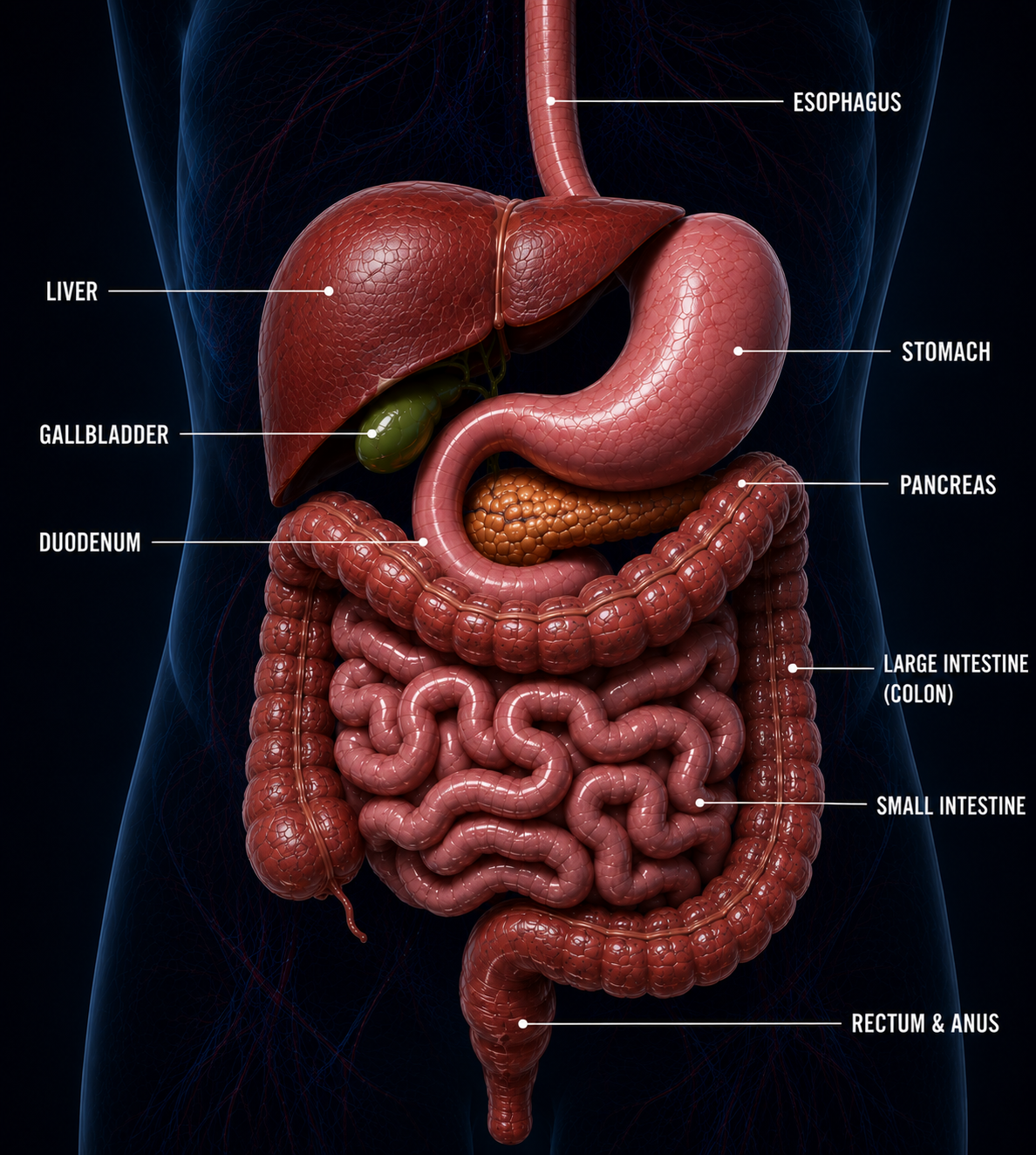
Understanding every member of the GI multidisciplinary team — their roles, scope, and how they collaborate. Click any skill tag to learn more.
🩺
Interventional Gastroenterologist
Advanced Endoscopist
Performs complex diagnostic and therapeutic procedures including EUS, ERCP, EMR, ESD, stenting, and endoscopic resection.
ERCPEUSEMR/ESDStenting
🏥
GI / Oncologic Surgeon
Surgical Oncology
Leads complex GI oncologic operations — esophagectomy, gastrectomy, total mesorectal excision (TME), and minimally invasive oncologic resections.
EsophagectomyGastrectomyTMELaparoscopic
🎯
Colorectal Surgeon
Colon, Rectum & Anus
Specializes in colorectal cancer resections, TME with sphincter preservation, transanal surgery (TEM/TAMIS), stoma care, and complex IBD surgical management.
LAR/APRTEM/TAMISStoma CareIBD Surgery
⚕️
Hepatobiliary Surgeon
Liver, Pancreas & Bile Ducts
Expert in hepatic resections, Whipple procedures, distal pancreatectomy, bile duct reconstruction, and liver transplantation — including portal vein resection and reconstruction.
WhippleHepatectomyLiver TransplantBile Duct Repair
💊
Medical Oncologist
GI Oncology
Oversees systemic therapy — chemotherapy, targeted therapy, immunotherapy — and coordinates neoadjuvant and adjuvant strategies.
ChemotherapyImmunotherapyTargeted AgentsClinical Trials
🔊
Endosonographer
EUS Specialist
Expert in EUS-guided tissue acquisition, staging, and interventional EUS — the bridge between radiology and endoscopy.
EUS-FNAEUS-FNBStagingInterventional EUS
🔬
Pathologist
GI & Cytopathology
Provides definitive tissue diagnosis from biopsies, resections, and EUS-guided specimens. Rapid on-site evaluation (ROSE) and molecular profiling.
ROSECytopathologyMolecular ProfilingIHC
💉
Anesthesiologist
GI Procedural Sedation
Manages sedation and airway in complex procedures — TIVA, monitored anesthesia care, and general anesthesia for high-risk patients.
TIVAMACAirway ManagementRisk Stratification
🩻
Interventional Radiologist
IR / Vascular
Partners for TIPS, biliary drainage, TACE, Y-90 radioembolization, and percutaneous access when endoscopic approaches aren't feasible.
TIPSTACEY-90Biliary Drainage
⚡
Radiation Oncologist
GI Radiation
Delivers targeted radiation — SBRT, IMRT, proton therapy — for GI malignancies, often combined with systemic therapy.
SBRTIMRTProton TherapyChemoradiation
🧭
GI Nurse Navigator
Care Coordinator
Coordinates the patient journey through the multidisciplinary team — scheduling, education, clinical trial enrollment, and post-procedure surveillance.
Care CoordinationPatient EducationSurveillanceTrial Enrollment
🧬
Genetic Counselor
Hereditary GI Cancer
Evaluates hereditary GI cancer syndromes — Lynch, FAP, BRCA-related pancreatic risk — and guides risk-stratified surveillance strategies.
Lynch SyndromeFAPBRCA / PALB2Germline Testing